From Patty to Perfection: The Real Science of a Killer Grilled Burger
Everybody thinks they know how to grill a burger. Slap it on, flip it once, done. But if you've ever bitten into a patty that was somehow both charred on the outside and weirdly pink in the middle — or worse, a dry, gray hockey puck — you already know that confidence and skill aren't always the same thing.
At Grill 'N Shake, the burger is sacred. It's the heart of what we do, and getting it right isn't just about taste — it's about understanding what's actually happening on that grill. So let's get into it.
It All Starts with the Meat Blend
Before you even think about firing up the grill, you need to get your beef right. Most seasoned grill cooks swear by an 80/20 blend — that's 80% lean beef to 20% fat. Why? Because fat is flavor, plain and simple. When that fat renders over high heat, it bastes the patty from the inside out, keeping things juicy and rich.
Go leaner than 80/20 and you're gambling with dryness. Go fattier and you risk flare-ups that can leave your burger tasting more like ash than beef. Some grillmasters even mix in a little chuck with sirloin for a more complex beefy flavor. If your butcher gives you the option to grind fresh, take it — pre-ground beef that's been sitting in a package just doesn't hit the same way.
For those who want to go the extra mile, a short rib blend (about 70% chuck, 30% short rib) adds a buttery richness that'll make your backyard guests ask what your secret is.
The Maillard Reaction: Your Best Friend on the Grill
Here's where things get nerdy — in the best way. That gorgeous, caramelized crust on a perfectly grilled burger? That's not just browning. That's the Maillard reaction, a chemical process that occurs when amino acids and sugars in the meat are exposed to high heat (typically above 280°F). The result is hundreds of new flavor compounds that create depth, savoriness, and that unmistakable grilled aroma.
To trigger this reaction properly, your grill needs to be hot. We're talking 450°F to 500°F for direct heat grilling. A grill that isn't hot enough will steam the patty rather than sear it, and you'll end up with a sad, gray exterior instead of that beautiful brown crust.
Pro tip: Make sure your grates are clean and lightly oiled before you lay down any patties. A dirty grill not only sticks — it can introduce off-flavors that compete with all that beefy goodness you're working so hard to develop.
Temperature Control Is Everything
This is where most home grillers go sideways. They cook on a single heat level the whole time, never thinking about zones. Setting up a two-zone fire — one side blazing hot for searing, the other at medium heat for finishing — gives you control over the entire cooking process.
Here's a simple breakdown of internal temperatures to aim for:
- Medium-rare: 130–135°F
- Medium: 140–145°F
- Medium-well: 150–155°F
- Well-done: 160°F+
The USDA recommends ground beef reach 160°F for food safety, so if you're cooking for kids, pregnant guests, or anyone with a compromised immune system, that's your target. For everyone else, medium (around 145°F) tends to hit that sweet spot of safety and juiciness.
Invest in an instant-read thermometer. Seriously. Poking and pressing a patty to guess doneness is a guessing game, and guessing games have losers. A good thermometer costs less than a bag of charcoal and will change your grilling life.
Timing, Flipping, and the Myths You Need to Drop
The old rule about flipping only once? Mostly outdated. Recent culinary research actually suggests that flipping a burger multiple times — every 30 seconds or so — can cook it more evenly and reduce cooking time. That said, for the classic backyard approach, two flips over roughly 8–10 minutes total (for a 3/4-inch patty) still works just fine.
What you should absolutely not do is press down on the patty with your spatula. That move squeezes out all those precious juices you worked so hard to keep in. It might feel satisfying, but your burger will pay the price.
Another common mistake? Skipping the rest. Just like a steak, a burger benefits from 2–3 minutes of rest off the heat before you bite in. This lets the juices redistribute instead of flooding out onto your plate the second you cut in.
The Cheese Question
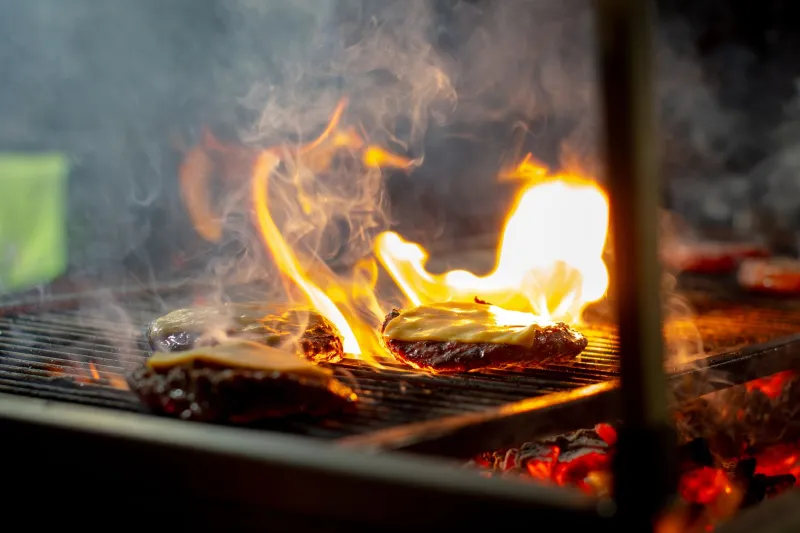
Timing your cheese is an art form. Add it too early and it burns or slides off. Too late and it never melts properly. The sweet spot is about 60 seconds before the burger comes off the grill. Lay the slice on, close the lid briefly to trap steam, and let it melt into that glorious, drapey perfection. American cheese melts best for classic vibes; sharp cheddar adds a bolder bite; pepper jack brings heat if that's your thing.
The Grill 'N Shake Pairing: Because a Great Burger Deserves a Great Shake
Here's where the chill meets the grill. At Grill 'N Shake, we believe the milkshake isn't just a side — it's a flavor companion. And just like pairing wine with food, matching your shake to your burger can elevate the whole experience.
Try these combos:
- Classic smash burger with American cheese → Vanilla bean milkshake. Clean, creamy, lets the beef shine.
- Bacon jalapeño burger → Strawberry milkshake. The sweetness cools the heat beautifully.
- Mushroom Swiss burger → Chocolate peanut butter shake. Earthy, rich, and indulgent in all the right ways.
- BBQ bacon burger → Salted caramel shake. Smoky meets sweet in the most satisfying way possible.
The contrast between a hot, savory, just-off-the-grill patty and a cold, creamy shake is one of those simple pleasures that never gets old. It's exactly the experience we're all about here.
The Takeaway
A great grilled burger isn't luck — it's layers. It's the right meat blend, a ripping hot grill, proper temperature monitoring, and a little patience at the end. Master those fundamentals and you'll be turning out burgers that make people stop mid-conversation to compliment the cook.
And when you're ready to complete the experience, pour yourself something cold and creamy. Because at Grill 'N Shake, the science of the perfect meal doesn't stop at the grill — it ends with a shake in your hand.