Hot Char, Cold Cream: Why Your Brain Is Totally Wired for the Grill-and-Shake Experience
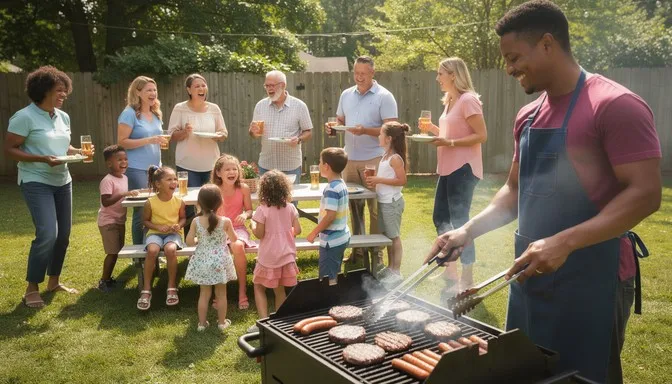
Photo: backyard cookout burger milkshake summer nostalgia family, via images.stockcake.com
Picture this: It's a warm Saturday afternoon. The grill is going, the smell of charred meat drifts across the yard, and someone hands you a thick, frosty milkshake. You take a sip, then grab a bite of burger, and for a second — just a second — everything feels right with the world.
That feeling isn't random. It's not just hunger or nostalgia or the fact that you've been outside all day. There's a surprisingly deep web of psychology, neuroscience, and cultural conditioning happening every time you pair grilled food with a cold, creamy shake. And once you understand why it works, you'll never look at your cookout spread the same way again.
The Brain Loves Contrast (More Than It Loves Comfort)
Human brains are wired to pay attention to contrast. It's an evolutionary thing — detecting change in your environment is how your ancestors stayed alive. That same hardwiring shows up in how we experience food.
When you eat something hot and something cold in close succession, your brain registers both sensations more intensely than it would if everything were the same temperature. The heat from a freshly grilled burger patty activates thermoreceptors on your tongue. The cold from an ice cream-based milkshake immediately counteracts that signal. Your nervous system, essentially, lights up.
Food scientists refer to this as thermal contrast, and it's one of the reasons certain flavor combinations feel more exciting and satisfying than their individual parts would suggest. The contrast doesn't just affect temperature perception — it amplifies flavor signals, too. Cold suppresses some taste receptors while heightening others, which means your milkshake actually tastes sweeter when consumed alongside something savory and hot off the grill.
Smoke and Sugar: A Chemical Romance
There's also something happening at the flavor chemistry level that makes this pairing work so well. Grilled food — particularly beef, pork, and chicken — develops complex flavor compounds through the Maillard reaction, the chemical process that creates that gorgeous brown crust and deep, smoky char. These compounds tend to be savory, slightly bitter, and intensely aromatic.
Milkshakes, by contrast, are built on fat, sugar, and dairy — all of which are natural flavor carriers. The fat in ice cream literally coats your taste buds and extends the time your palate spends with each flavor molecule. When you follow a bite of charred, savory meat with a sip of sweet, creamy shake, you're not just cleansing your palate — you're creating a flavor bridge that makes both experiences richer.
Some culinary researchers describe this as flavor bridging: using one food to extend or deepen the experience of another. It's the same principle behind pairing wine with cheese, or coffee with chocolate. Grilled meat and milkshakes are, in a very real sense, a natural flavor pair.
The Nostalgia Factor Is Real — And It's Powerful
Beyond the science, there's a cultural and emotional dimension to this combo that's hard to overstate. The grill-and-shake experience is deeply embedded in American food culture. Drive-in diners from the 1950s, backyard cookouts from every summer of your childhood, the smell of charcoal mixed with the sight of a hand-dipped cone — these are some of the most potent sensory memories Americans carry.
Nostalgia, it turns out, is one of the strongest triggers for food satisfaction. Research in consumer psychology consistently shows that foods associated with positive memories taste better — literally better, not just emotionally. When you fire up the grill and blend a shake, you're not just making dinner. You're activating a whole network of associations tied to warmth, family, summer, and celebration.
That's a powerful cocktail, and it partially explains why this combination feels so distinctly American. It's not just about the food — it's about what the food represents.
Texture Plays a Bigger Role Than You Think
One more layer: texture contrast. Grilled food is all about surface tension — the crunch of a charred crust, the chew of a properly rested steak, the snap of a hot dog casing. Milkshakes are the opposite: smooth, liquid, effortless.
When you alternate between high-texture food and a smooth drink, your brain registers the variety as abundance. You're getting more sensory input per meal, which translates to a feeling of greater satisfaction. Studies on eating behavior suggest that meals with more textural variety tend to feel more filling and more enjoyable, even when calorie counts are similar.
In other words, the shake isn't just a dessert add-on. It's completing the sensory picture that the grill started.
Why This Matters for Your Next Cookout
Understanding the psychology behind the grill-and-shake experience gives you a real advantage as a host. You're not just offering food — you're engineering a sensory experience that hits people on multiple levels simultaneously.
Think about how you sequence the meal. Serve shakes while the grill is still going, not just at the end. Let guests sip between bites rather than saving the shake for dessert. Lean into contrast: if you're grilling something smoky and heavily seasoned, pair it with a simpler, sweeter shake. If the protein is lighter — grilled chicken or fish — a more complex shake with tart or fruity notes can step up and carry more of the flavor load.
At Grill 'N Shake, we've always believed that the hot and the cold belong together. Now you know exactly why your brain agrees.