Why the Burger at Your Favorite Spot Destroys Yours Every Time — And How to Actually Fix That
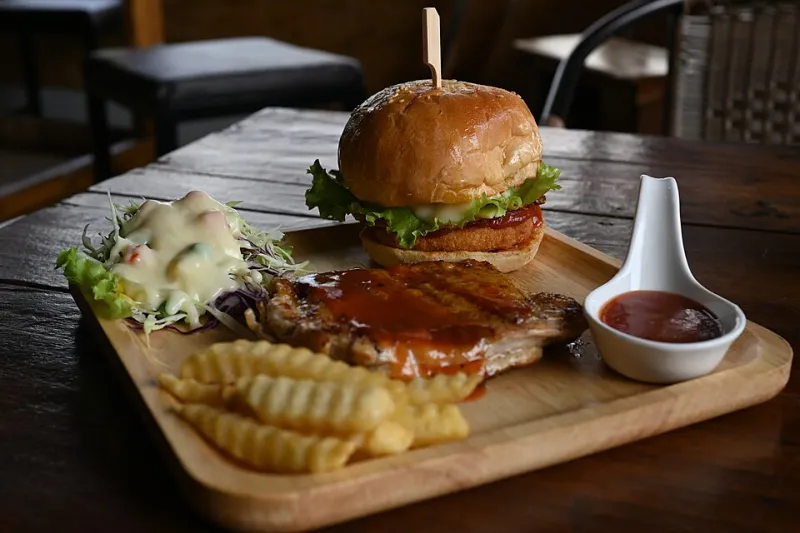
Photo: Pattaya Patrol, CC BY-SA 4.0, via Wikimedia Commons
Let's be honest about something uncomfortable: most home grilled burgers are fine. They're edible, they're familiar, and they disappear fast at a cookout. But they're almost never as good as the burger at that one place you keep going back to. You know the one. The one where the patty has that perfect crust, the juice runs when you bite it, and somehow every single element just works.
So what's the deal? You're using ground beef, you've got fire, and you're not an idiot in the kitchen. Why does theirs win every time?
The answer isn't one big secret. It's about six or seven small ones — and most of them are fixable without buying a new grill or breaking the bank.
The Fat Ratio Is Doing More Work Than You Think
This is the biggest and most common mistake home cooks make: buying the wrong grind. If you're grabbing 90/10 or even 85/15 ground beef because it seems like the responsible choice, you're starting behind the eight ball.
Restaurants typically use beef with an 80/20 fat-to-lean ratio at minimum. Some go higher. That fat isn't just flavor — it's moisture insurance. When a burger hits a screaming-hot surface, the fat renders, bastes the patty from the inside, and creates that crust you can't replicate with lean meat. Lean beef dries out fast and tastes like it.
Fix it: Buy 80/20 ground chuck, or ask your butcher to grind something custom if your store has a counter. For a real upgrade, request a blend of chuck and short rib. That's a restaurant move that costs maybe a dollar more per pound and pays off every time.
Their Grill Temperature Is Probably Not What You Think
Here's a misconception that trips up a lot of home grillers: restaurant flat-tops and griddles often cook burgers at extremely high, consistent heat — not the uneven, flare-up-prone environment of a backyard gas or charcoal grill.
That consistent contact heat is why smash burgers from a diner have that lacey, caramelized crust. Your grill has hot spots, cold zones, and open flame that can scorch the outside before the inside is done.
Fix it: Preheat your grill longer than you think you need to — at least 15 minutes on high. Use a cast iron skillet directly on the grill grates if you want that flat-top effect. A screaming-hot cast iron pan on your grill is one of the most underrated burger tools available, and it costs less than a bag of charcoal.
Seasoning Too Early Is Quietly Ruining Your Patty
Salt draws out moisture. That's basic food science. When you season a ground beef patty and let it sit for 20 minutes before cooking, the salt starts pulling liquid to the surface and can change the protein structure in a way that makes the burger slightly rubbery.
Restaurant cooks season right before — or even right after — the patty hits the heat. It's a small timing change with a noticeable textural payoff.
Fix it: Season the outside of your patty immediately before it goes on the heat. Don't work seasoning into the meat unless you're going for a specific style. Keep it simple: kosher salt and coarse black pepper. That's it.
The Smash Is Not Optional
If you're making a smash-style burger and you're gently pressing instead of actually committing, you're missing the whole point. The Maillard reaction — the chemical process that creates that brown, savory crust — needs maximum surface contact and high heat. A timid press doesn't cut it.
Fix it: Use a heavy spatula or a burger press and push down hard within the first 30 seconds of the patty hitting the heat. Don't touch it again until it's time to flip. One flip only.
The Bun Is Getting Disrespected
Restaurants toast their buns. Every time. On the flat-top, in the oven, on the grill — it doesn't matter. A toasted bun has structural integrity, adds a layer of texture, and holds up to juicy meat without disintegrating after two bites.
A soft, untoasted bun turns into a soggy mess in under a minute, and it drags the whole burger down with it.
Fix it: Butter your buns lightly and toast them cut-side down on the grill or in a cast iron pan for 60 to 90 seconds. This takes no extra time and makes an enormous difference.
The Rest Is Mise en Place
Restaurant kitchens have everything prepped and ready before service starts. Cheese is sliced and at room temp. Lettuce is crisp and dry. Sauce is pre-made. When the burger comes off the heat, it gets built immediately with intention.
At home, we're usually scrambling. The cheese goes on too late, the tomato is cold from the fridge, and the sauce is getting spooned straight from the jar while the patty sits and steams.
Fix it: Treat your next backyard burger session like a restaurant ticket. Prep everything before the grill gets lit. Have your toppings ready, your sauce mixed, your cheese at room temperature. Build the burger the second it comes off the heat and serve it immediately.
The Shake Connection
One more thing worth mentioning: great burger spots usually have great shakes. That's not a coincidence. The balance of a cold, creamy shake against a hot, salty, charred burger is one of those combinations that's greater than the sum of its parts. Once your burger game levels up, pair it with a shake that's built to match — something with enough richness to stand up to all that smoke and fat.
Close the gap on the burger first. Then let the shake finish the job.